VLEO: Why Very Low Earth Orbit is the Next Frontier for Satellite Operations
Very Low Earth Orbit is where the next generation of satellite missions is heading. Better resolution, lower costs, natural debris cleanup, and defense interest are driving a market projected to hit $1.5 billion by 2034.
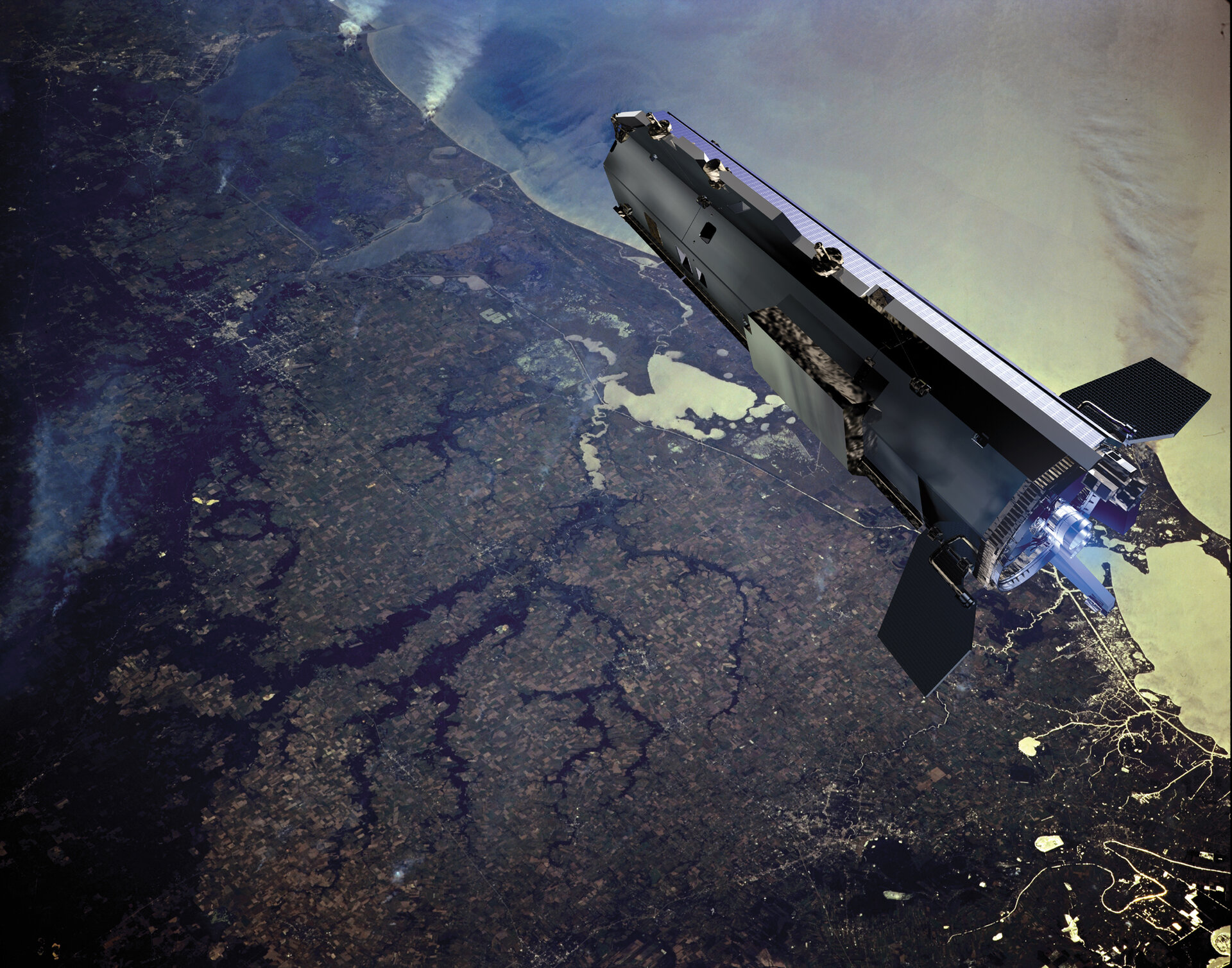
Most satellites operate between 500 and 2,000 km above Earth. That’s standard Low Earth Orbit. But a growing number of companies, defense agencies, and space programs are looking lower. Much lower. Between 200 and 450 km, in a region called Very Low Earth Orbit.
VLEO isn’t new. U.S. spy satellites operated there since the 1960s, and ESA’s GOCE mission mapped Earth’s gravity field at 250 km from 2009 to 2013. What’s new is that the technologies needed to make VLEO commercially viable, propulsion systems that can fight atmospheric drag, materials that resist atomic oxygen erosion, power systems that work in challenging thermal environments, are finally maturing.
The VLEO satellite market is projected to grow from $10.4 million in 2025 to $1.5 billion by 2034, a 73.86% CAGR. By 2030, over 620 satellites are expected to operate in VLEO, up from a handful today.
What Counts as VLEO?
The exact boundary depends on who you ask. ESA defines VLEO as altitudes between 100 and approximately 450 km, with most operations at 250-350 km. The practical definition comes from physics: VLEO is where the residual atmosphere has a significant impact on satellite design and operations.
| Parameter | VLEO | Standard LEO |
|---|---|---|
| Altitude | 100-450 km | 450-2,000 km |
| Typical operations | 200-400 km | 500-1,200 km |
| Atmospheric drag | Significant, requires active propulsion | Minimal at higher altitudes |
| Satellite lifetime without propulsion | Days to weeks | Years to decades |
| Van Allen radiation | Well below (belt starts ~600 km) | Increasingly exposed at higher altitudes |
The ISS illustrates how much altitude matters at these ranges. When it raised its orbit from 350 km to 400 km in 2011, annual fuel consumption dropped from 8,600 kg to 3,600 kg. A 50 km difference cut fuel use by more than half.
Why Go Lower? The Advantages
Resolution That Changes the Game
The physics are simple. Closer to the ground means better imagery from the same sensor. Tom Campbell, President of Redwire Space Missions, puts it concretely: being “half as close to the ground makes a sensor four times more perceptive.” For radar payloads, the improvement is 8x. For LIDAR, 16x.
This isn’t theoretical. Albedo’s Clarity-1 satellite, launched March 2025 and orbiting below 300 km, delivers 10 cm visible and 2 m thermal imagery, resolution previously only achievable from aircraft. EOI Space’s Stingray constellation at 250 km will deliver 15 cm resolution. CEO Topher Haddad describes the goal: “exquisite capability but not at an exquisite price.”
Lower Costs, Smaller Payloads
ESA Principal Engineer Luca Maresi: “It is easier to get to, requires fewer resources for communications, and allows for smaller payloads.” Less delta-v to reach orbit means launch vehicles can deliver larger payloads, reducing the per-kilogram launch cost. And because sensors perform better at lower altitudes, you can use smaller, cheaper optics to achieve the same resolution as a much larger instrument at 500+ km.
Reduced Radiation
VLEO altitudes sit well below the inner Van Allen radiation belt, which typically starts at 600-1,600 km. The practical impact: VLEO satellites can use commercial off-the-shelf electronics instead of expensive radiation-hardened components. This significantly reduces satellite cost and opens up design options that aren’t available at higher orbits.
Self-Cleaning Orbits
At VLEO altitudes, atmospheric drag naturally removes defunct satellites and debris within days to weeks. No active deorbiting systems needed. The FCC shortened its post-mission disposal requirement from 25 years to 5 years in 2022. VLEO satellites exceed this requirement by default.
This makes VLEO essentially immune to the Kessler syndrome, the cascading collision scenario that threatens higher orbits. With 70,000 LEO satellites projected over the next five years, orbital congestion at standard LEO makes the self-cleaning nature of VLEO increasingly attractive.
Communications Benefits
Lower altitude means lower latency for data transmission. It also reduces free-space path loss, meaning satellites can close communication links with smaller antennas. SpaceX filed with the FCC for 15,000 additional VLEO satellites at 326-335 km specifically for Direct-to-Cell service, targeting 150 Mbps speeds to standard smartphones. Lower altitude also enables denser frequency reuse patterns, since each satellite’s footprint is smaller.
The Engineering Challenges
VLEO isn’t easy. If it were, everyone would already be there.
Staying in Orbit
Sven Bilen at Penn State puts it simply: “The biggest challenge of orbiting in VLEO is staying in VLEO.”
Atmospheric drag at these altitudes is significant enough that a satellite without propulsion will deorbit in weeks or even days. Continuous thruster firing is needed to maintain altitude, comparable to pedaling a bicycle against strong wind. Mitchell Walker at Georgia Tech adds: “VLEO demands high flexibility and adaptability in propulsion devices, far beyond conventional systems.”
Atomic Oxygen
Up to 96% of the atmosphere at VLEO altitudes is atomic oxygen, which causes rapid corrosion of most materials, including thermal coatings, solar arrays, and optical systems. ESA’s DISCOVERER project addressed this directly, developing AO-resistant coatings that led to a commercial spin-out, CASA Space Technologies, in 2024.
Thermal Stress and Aerodynamics
VLEO satellites complete an orbit roughly every 90 minutes, cycling through sunlight and shadow 16 times per day. Each cycle is a thermal stress event. Satellite shape also matters significantly. ESA’s GOCE used an arrow-shaped body with stabilizing fins at 255 km. China’s Chutian-001 uses a bullet-shaped design specifically engineered to minimize atmospheric drag.
How the Propulsion Problem is Being Solved
The key enabling technology for VLEO is propulsion that can continuously compensate for drag without running out of fuel.
Proven in flight: ESA’s GOCE used xenon ion thrusters producing 1-20 millinewtons of thrust, maintaining drag-free flight at 250 km for over three years with a 40 kg xenon tank.
Electric propulsion: EOI Space developed a proprietary Hall-effect thruster (HET-X) designed to maintain its Stingray constellation at 250 km for up to 5 years.
Air-breathing propulsion (the holy grail): Multiple teams are developing systems that collect the residual atmosphere as propellant, eliminating the need for onboard fuel storage entirely:
- DARPA’s Otter program ($44M contract with Redwire) aims to demonstrate air-breathing electric propulsion for 1+ year VLEO operations
- Kreios Space (Spain) raised EUR 8M seed led by NATO Innovation Fund for their ABEP system, with a demo mission planned for early 2027
- NewOrbit Space achieved a specific impulse of 6,380 seconds with their air-breathing ion propulsion system
If air-breathing propulsion works at scale, it removes the fundamental constraint of VLEO operations. A satellite that uses the atmosphere as fuel has, in principle, unlimited operational lifetime.
Who’s Building for VLEO?
The list is long and growing fast.
Defense is leading. Tom Campbell of Redwire: “Defense is driving most VLEO investment.” The European Defence Agency signed a EUR 15.65M contract in March 2026 for the first European military VLEO satellite concept (VLEO-DEF), involving five member states and 17 organizations. DARPA’s $44M Otter program with Redwire targets 150 km operations. Albedo’s customers include the National Reconnaissance Office and Air Force Research Lab.
China is moving fast. CASIC plans a 300-satellite VLEO constellation at 150-300 km, targeting 192 satellites by 2027 and full constellation by 2030, with 0.5 m resolution and sub-10 minute response times.
Japan has proven it works. JAXA’s SLATS/Tsubame satellite operated at altitudes down to 167.4 km in 2017-2019, earning a Guinness World Record for the lowest-altitude Earth observation satellite.
ESA is investing broadly. Beyond GOCE and DISCOVERER, ESA’s Skimsat mission with Redwire will demonstrate small satellite VLEO operations. A dedicated VLEO campaign funded 12 proposals across aerodynamics, propulsion, and applications.
Commercial players are multiplying. Albedo (below 300 km, 10 cm imagery), EOI Space (250 km, 15 cm imagery, first launch December 2026), Kreios Space (ABEP propulsion, NATO-backed), and SpaceX (15,000-satellite VLEO filing for Direct-to-Cell) are all racing to establish VLEO capabilities.
As Stefanos Fasoulas at the University of Stuttgart puts it: “We are convinced that this part of space will be very important in the near future, for scientific applications and also for commercial applications.” His CRC 1667 ATLAS program, funded by the German Research Foundation through 2036, is dedicated entirely to advancing VLEO satellite technologies.
Why VLEO Matters for Technology Validation
VLEO is an operationally demanding environment, and that’s exactly what makes it valuable for technology validation. Hardware that survives VLEO, with its atmospheric drag, atomic oxygen exposure, extreme thermal cycling, and propulsion requirements, has been stress-tested in ways that standard LEO simply can’t match.
For propulsion companies testing new thruster designs, VLEO provides the ultimate proving ground. For Earth observation sensors, it delivers resolution that demonstrates what the hardware can actually do. For communications systems, it tests link budgets in conditions that push the limits of the technology.
Satelyx’s VLEO-1 mission, launching Q2/Q3 2027, is designed around this principle. A 100kg-class sun-synchronous platform at 400 km with ~8 kg of payload capacity, N2O chemical propulsion for orbit maintenance, and high-speed X-band downlink at up to 450 Mbps. It’s built to validate hardware in VLEO conditions and deliver the flight heritage that turns promising technology into deployable capability.
Interested in validating your technology in VLEO? Get in touch to discuss VLEO-1 payload opportunities.
Ready to Validate Your Hardware in Orbit?
Join the next wave of space innovation with Satelyx.
Discuss Your Mission