SINC 2026: what the Maldives gets right about space
SATELYX joined SINC 2026, the Space for Island Nations Conference run by the Maldives Space Research Organisation, to talk about validating ocean data from space. Here is what stood out.
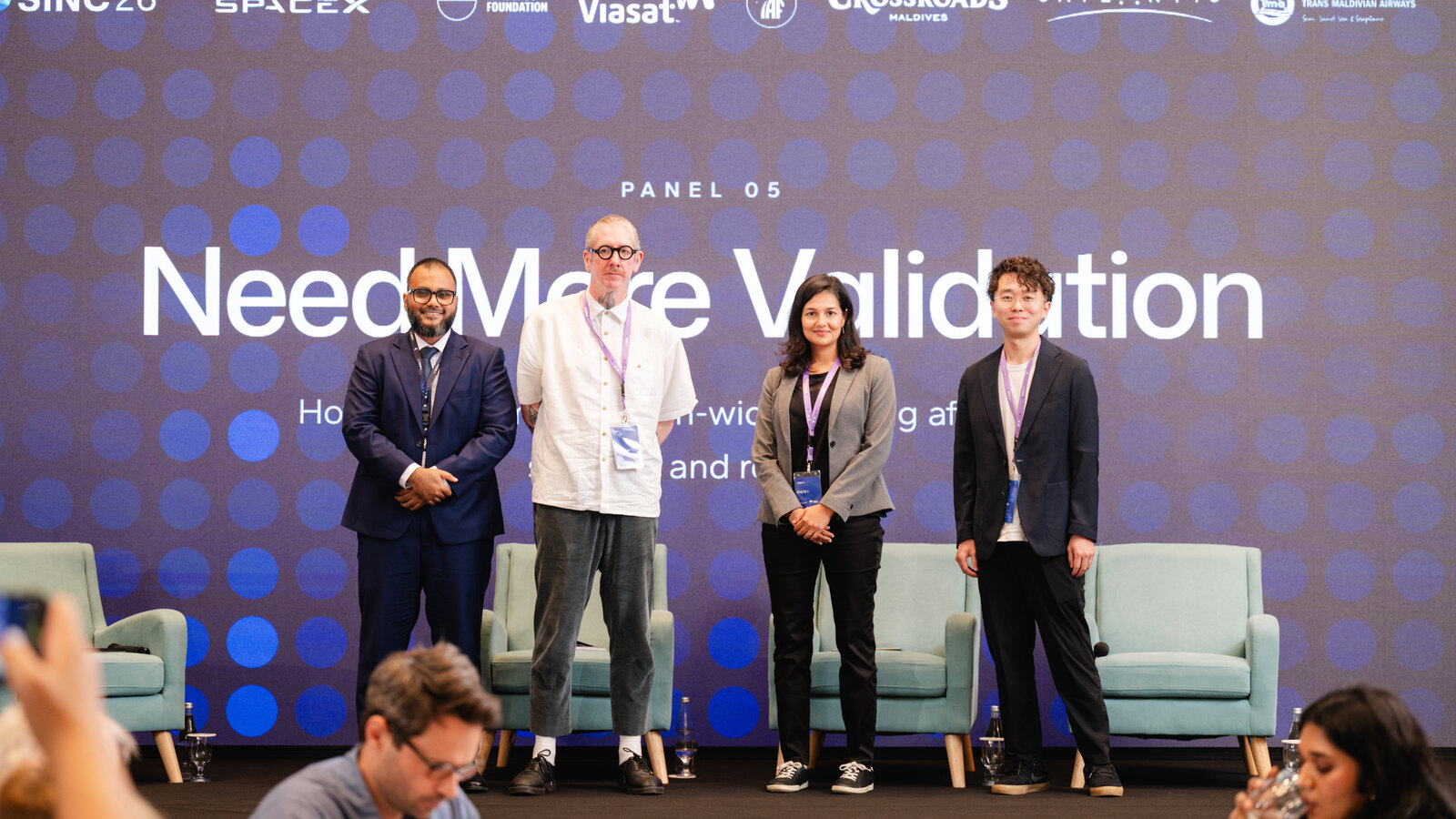
At the end of October, SATELYX was in the Maldives for SINC 2026, the Space for Island Nations Conference. The Maldives Space Research Organisation (MSRO) runs it, and this year’s edition took place from 25 to 28 October at Crossroads Maldives. Our co-founder and co-CEO Matthew Mappin spoke on Panel 05, Need More Validation, which asked how ocean-wide sensing can be made affordable, scalable and reliable.
First, thank you to MSRO for the invitation. We were made to feel very welcome, and we left with a lot to think about.
A space agency that runs like a startup
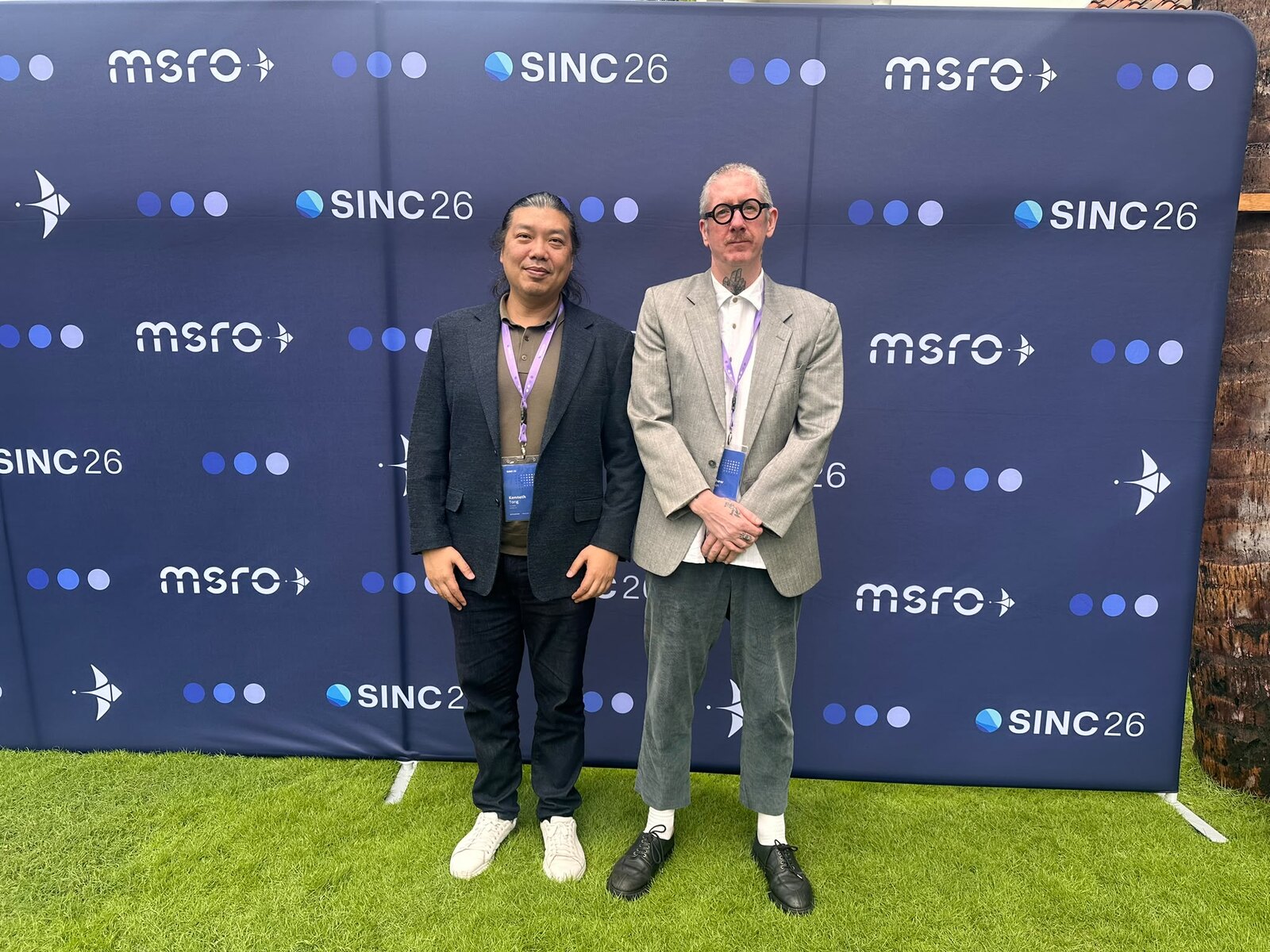
What struck Matthew first was how well organised the whole event was, and how different MSRO is from a typical national space agency.
“It’s run very well by a young team, so it’s very different from typical space agencies, because it’s run like a startup. They’re doing a lot of research, they’re able to attract a lot of partners, and they’re able to convince different authorities on the use cases of space. They’re quite fresh, quite young, and they know how to move very fast. They’re very agile.”
Matthew Mappin, Co-founder and Co-CEO, SATELYX
That pull showed in the room. SINC brought ambassadors, agencies and companies to the Maldives for four days, and the programme gave them real time together, with long panels and closed-door sessions alongside the main stage.
Space and the sea
The Maldives is an ocean nation, and that shaped the whole conference. “Space for Oceans” was one of its themes, and MSRO used its day-one keynote to reveal what it called a paradigm shift in how the ocean is observed from space.
“As a big ocean nation, it’s surrounded by ocean, which is very difficult to monitor from space because you don’t have the ground truth. And the fact that they were able to get India, China and the US on stage, representatives all in the same place, was really interesting. Talking about the commons, the commons of space and the sea.”
Matthew Mappin
The country perspectives session, with ambassadors and senior diplomats speaking about their space ambitions and cooperation with island nations, was a good example of the neutral ground MSRO has built, a place where countries can talk openly about the ocean and space they share.
What we talked about: validation
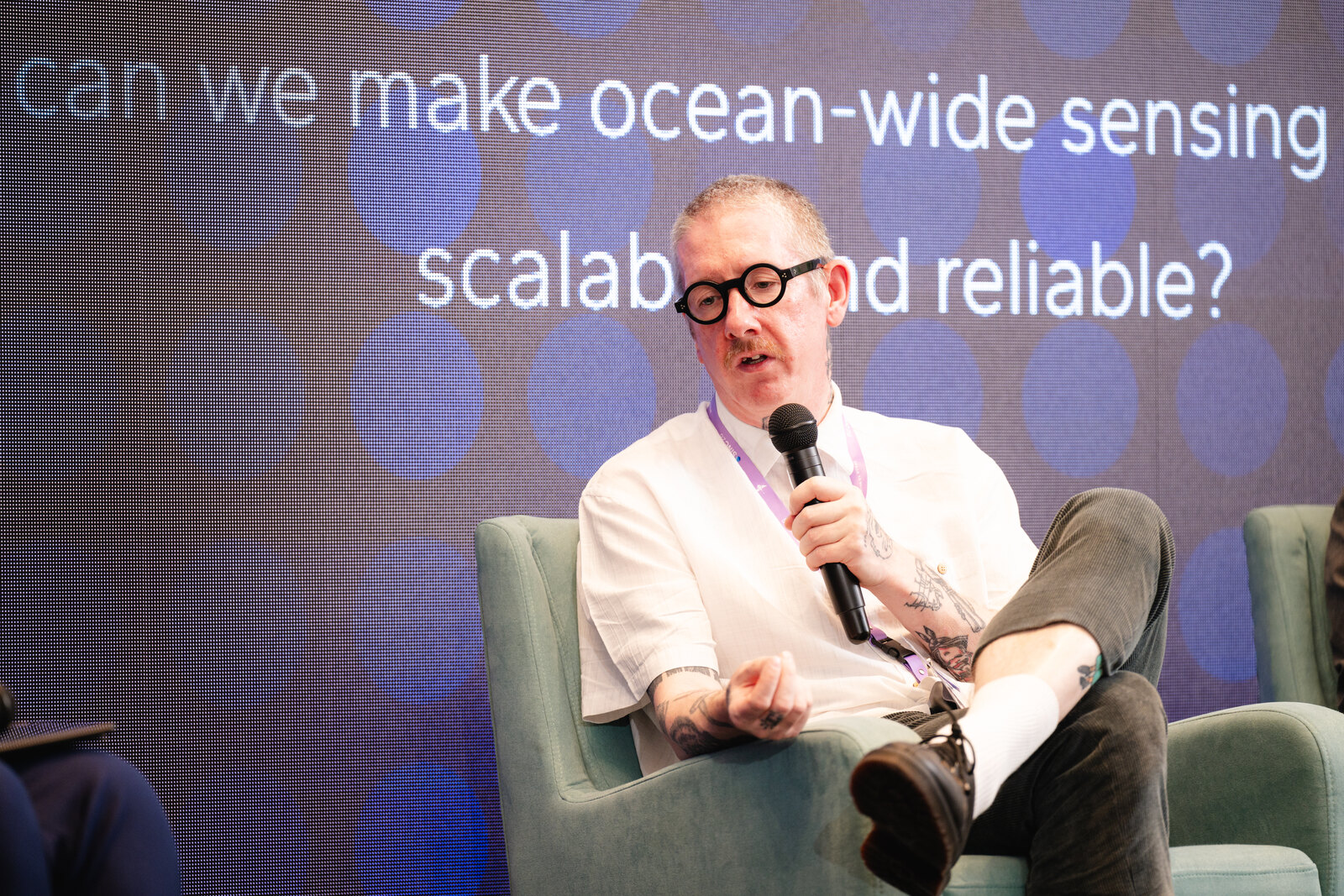
Panel 05 looked at how satellites, connectivity and sensors in the water can work together to close observation gaps and validate ocean data.
“We gave our perspective from running EO alongside edge compute, and how difficult it is to validate that data with ground truth in an environment as dynamic as the ocean.”
Matthew Mappin
Tip and cue was one of the big topics at SINC. One sensor spots something, such as a vessel or a change in the water, and cues another satellite or asset to take a closer look, with edge computing on board making that first step faster. It only works if every step can be trusted, which brings it back to validation: showing that what a sensor reports from orbit is right, and recording how it was checked.
Ground truth ties those together. Measurements from the water check and calibrate what satellites see, and satellite data shows where to look in the water. A new sensor or algorithm only earns trust once its results have been checked against reality, in orbit and under real conditions, which is the same reason SATELYX exists. We build and operate our own satellites for shared in-orbit demonstration (IOD) missions, so that teams can prove their hardware and software in space and leave with evidence their customers will accept.
Why we want to do more here
“I really want to work with them a lot. I think they’re really interesting, and they’ve got big pull because of their location, so strategically positioned as they are by the equator, with a lot of ocean. They’re doing a lot of great and impressive research, and it’s incredibly well executed, like the conference itself.”
Matthew Mappin
We will keep that conversation going with MSRO and the teams we met in the Maldives.
Event links
The SINC 2026 website has the full conference details, and the agenda lists every session across the four days, including Panel 05 on Monday 26 October.
You can read more about the organisers on the Maldives Space Research Organisation website.
Building a sensor, payload or algorithm that needs to prove itself in orbit? Request a mission review and we will set up a time to talk.
Does Your Space Technology Need Flight Evidence?
Start with a mission-fit review for the software or hardware you need to prove in orbit.
Discuss your payload